Written by Yogita Ambavta
Rising Concerns Over Children’s Digital Exposure
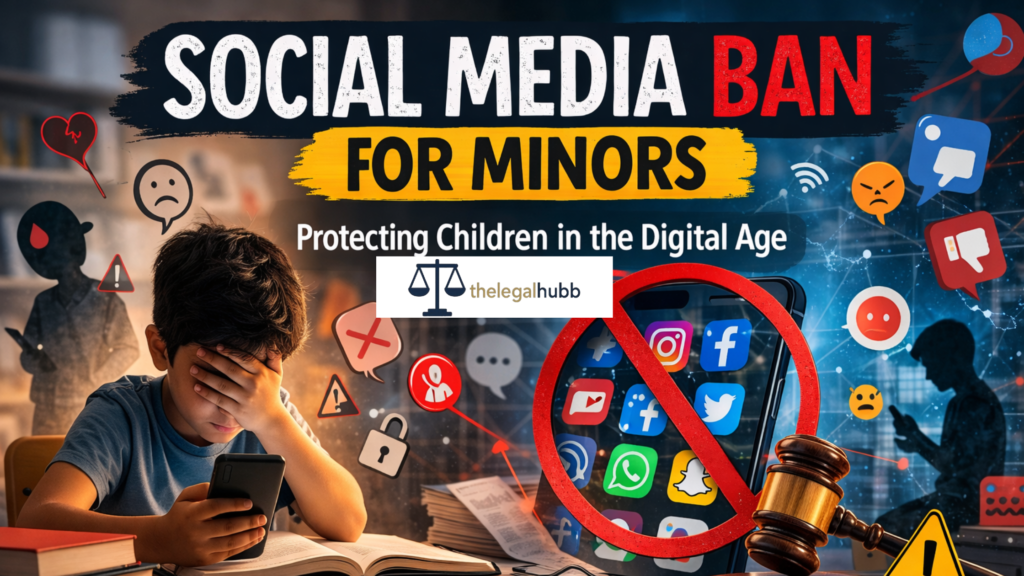
With the rapid expansion of smartphones and affordable internet access, social media has become an integral part of everyday life. However, growing concerns about the psychological and social effects of excessive digital exposure among children have prompted governments to consider regulatory intervention. In this context, states such as Karnataka and Andhra Pradesh have proposed banning social media access for minors in order to mitigate the harmful effects of increasing mobile phone usage among children. 7 march
The initiative reflects a broader global debate about how societies should balance technological access with the protection of young minds.
Proposed Restrictions in Karnataka and Andhra Pradesh
The proposed policies differ slightly in their age thresholds. Karnataka has suggested restricting social media use for children below the age of sixteen, while Andhra Pradesh has proposed a stricter restriction for children below thirteen years of age. The announcements were made as part of policy discussions and state-level governance initiatives aimed at addressing the negative consequences of excessive screen time among minors. 7 march
In Andhra Pradesh, the government has indicated that such a ban could be implemented within a short time frame, possibly within ninety days. At the same time, authorities are also considering additional regulatory mechanisms for adolescents between the ages of thirteen and sixteen.
These proposals highlight the growing urgency with which policymakers are approaching the issue of digital well-being.
The Debate Around Blanket Bans
Despite the concern surrounding children’s social media use, experts remain divided on whether a complete ban is the most effective solution. Critics argue that blanket prohibitions may be impractical to enforce and could push children toward unregulated digital spaces. Others contend that social media platforms provide opportunities for communication, creativity and learning, making outright bans potentially counterproductive.
Medical professionals and child development experts often emphasise the need for balanced solutions. Excessive use of mobile devices among children has been linked to psychological stress, addiction, declining attention spans and increased exposure to cyberbullying. At the same time, digital platforms can also support educational engagement and social connectivity.
The challenge, therefore, lies in regulating harmful use without completely eliminating beneficial opportunities.
Legal and Regulatory Challenges
Another important dimension of the debate concerns the distribution of legislative authority in India. Regulation of the internet and digital platforms largely falls under the jurisdiction of the Union government through laws such as the Information Technology Act and related digital intermediary regulations. As a result, state-level attempts to impose restrictions on social media usage may face constitutional and administrative challenges.
Experts have noted that any meaningful regulation of social media platforms would require coordination with central authorities and compliance with national digital governance frameworks.
This raises questions about how far state governments can go in imposing restrictions on digital platforms that operate across national and global networks.
Global Precedents and Policy Learning
India is not alone in considering restrictions on social media use by minors. Several countries have begun exploring regulatory mechanisms to protect children online. For instance, Australia recently introduced legislation requiring social media companies to restrict access for users below sixteen years of age, with severe financial penalties for non-compliance.
Such international developments indicate a growing recognition that digital platforms must assume greater responsibility in protecting young users.
India’s policy discussions therefore form part of a broader global movement toward strengthening digital safeguards for children.
Towards a Balanced Approach
While the proposal for banning social media access for minors reflects legitimate concerns, many experts argue that the solution lies in comprehensive digital literacy rather than outright prohibition. Parents, educators and policymakers must work together to create frameworks that guide responsible digital usage.
Educational programmes that teach children how to navigate online spaces safely may prove more sustainable than restrictive measures alone. Platform accountability, parental supervision and clear usage guidelines can collectively contribute to healthier digital engagement.
Conclusion
The debate over banning social media for minors underscores the complex relationship between technology and childhood development. As digital platforms continue to shape social interaction, governments face the difficult task of protecting young users while preserving the benefits of connectivity.
The proposals by Karnataka and Andhra Pradesh highlight an emerging policy shift toward stronger safeguards for children in the digital age. Whether through regulation, education or platform responsibility, the ultimate goal remains the same: ensuring that technological progress does not come at the cost of children’s well-being.