
A reform that was decades overdue is now entangled in questions of demography, fairness, and political calculation — and what happens next will reshape Indian democracy for a generation.
Written by Prashant Panwar
There are moments in the life of a democracy when the machinery of representation itself becomes the subject of contest. India is living through one such moment. Two reforms — delimitation of parliamentary constituencies and the reservation of one-third of seats for women — have been moving along separate tracks for decades, each stalled in its own particular bog of political difficulty. Now they appear to be converging, and the terrain they are converging on is as complicated as any this republic has had to navigate.
In September 2023, Parliament passed the Constitution (One Hundred and Sixth Amendment) Act — popularly known as the Nari Shakti Vandan Adhiniyam — which commits to reserving one-third of all seats in the Lok Sabha and state Vidhan Sabhas for women, including those constituencies already earmarked for Scheduled Castes and Scheduled Tribes. It was celebrated, with justification, as a historic moment. And yet the celebration was attended by an asterisk large enough to cast a shadow: implementation was deferred until after the next Census and the subsequent delimitation exercise. A promise had been made, but no date had been set for keeping it.
543 Current Lok Sabha seats | 816 Proposed strength | 1/3 Reserved for women | ~50% Proposed expansion
THE SHIFT
From Waiting to Acting: A Change of Strategy
For years, the position of successive governments was straightforward, if unsatisfying: women’s reservation would have to wait for the Census and delimitation. During the debates around the 2024 general election, opposition parties — led by the Congress — demanded immediate operationalisation. Women’s rights groups pointed out that tying the quota to delimitation was a way of ensuring it never arrived, since delimitation itself had been frozen since the early 1970s and showed little sign of being unlocked. The National Democratic Alliance government dismissed these concerns, arguing that implementation without updated Census data and delimitation would undermine both fairness and feasibility.
Recent reports, however, suggest that the government’s position has quietly but significantly shifted. Rather than waiting for a fresh Census and the delimitation process that would follow, the government now appears to be considering initiating a delimitation exercise based on the 2011 Census data — not waiting for the 2026-27 Census at all. Simultaneously, plans appear to be afoot to expand the Lok Sabha from its current 543 seats to approximately 816, a near-50 percent increase, with state assemblies enlarged proportionally. If implemented, this would be the most consequential structural change to India’s Parliament since its founding.
Implementing women’s reservation without waiting for the Census or delimitation exercise could undermine representation and the intended reforms.
THE NORTH-SOUTH DIVIDE
Demography as Destiny — and Dispute
The timing calculus here is inseparable from India’s demographic reality, which is itself deeply unequal. A strictly population-based approach to delimitation would hand significantly greater parliamentary weight to northern states — Uttar Pradesh, Bihar, Rajasthan, and Madhya Pradesh — where fertility rates remain relatively high and population growth continues at pace. Southern and peninsular states, by contrast, have largely stabilised their populations over the past three decades, driven by successful investment in education, health, and women’s empowerment. Tamil Nadu, Karnataka, Kerala, Andhra Pradesh, and Telangana together might see their representation capped — or even reduced relative to their economic contribution — while Uttar Pradesh and Bihar alone could approach 180 seats combined under an expanded house.
This arithmetic has profound political implications. The five southern states drive a disproportionate share of India’s economic growth, innovation, and tax revenue. They have, to a considerable extent, reaped the fruits of earlier population stabilisation. A delimitation exercise that rewards states for high fertility rates effectively penalises states that chose to govern themselves responsibly in this respect. The north-south divide is already one of the more quietly combustible fault lines in Indian federalism, and a delimitation exercise conducted on purely demographic grounds risks deepening it significantly.
IMPLEMENTATION GAPS
The Rotation Problem and the Question of Design
Even setting aside the north-south controversy, the Women’s Reservation Act itself contains significant gaps that the government will need to address before implementation is possible. The amendment mandates a one-third quota, but defers critical operational details — most notably, the question of how reserved constituencies will be rotated. This is no small matter. The rotation of reserved seats determines who contests from where, shapes the long-term career prospects of elected representatives, and influences accountability between a constituency and the person elected to represent it. Done badly, rotation can result in women being elected from constituencies where they have little prior connection, serving a single term, and then watching their seat revert to general category.
Experts have noted that in smaller states and Union Territories with only one or two Lok Sabha seats, rotation may function quite differently than in large states. There is also the unresolved question of sub-quotas for women from Other Backward Classes, and particularly Muslim OBC communities that remain underrepresented not merely in Parliament but across the structures of governance at every level. Several political parties and women’s organisations have already called for such sub-quotas, and the pressure is unlikely to abate once implementation begins.
THE LARGER STAKES
A Structural Transformation, Not a Marginal Adjustment
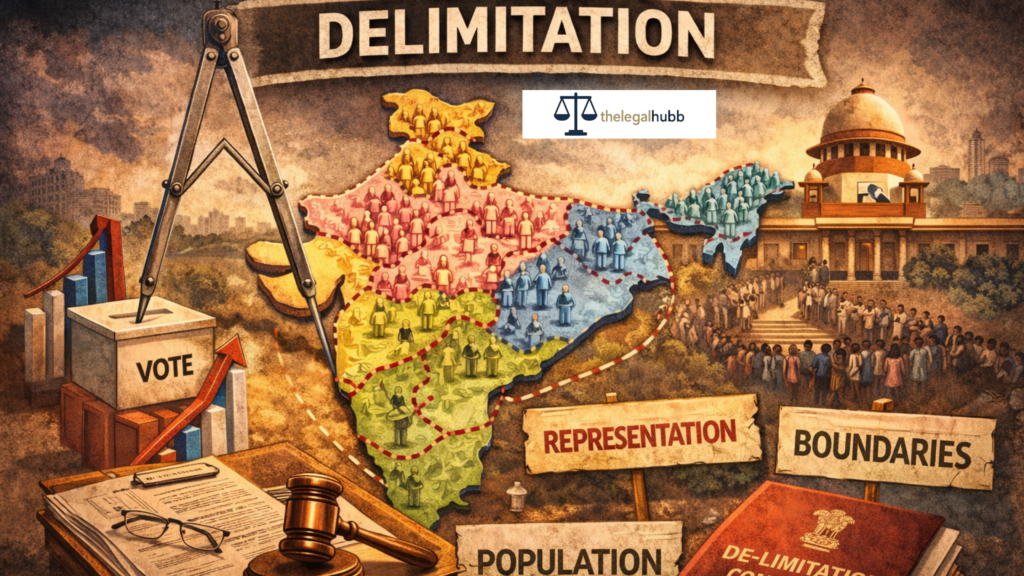
Viewed from a sufficient distance, what is being contemplated is not a technical exercise in boundary drawing. It is a foundational reordering of India’s electoral map — one that will recalibrate the weight of states, reconfigure the social composition of legislative bodies, and reshape how power flows between regions, communities, and genders for decades to come. Women’s reservation, seat expansion, and delimitation are not isolated changes; taken together, they represent the most consequential transformation of India’s representative system since the early decades of the republic.
The political incentive to move quickly is clear. The party that delivers women’s reservation enters the 2029 general election — and the several state elections that precede it — as the champion of a reform that enjoys near-universal popular support, at least in the abstract. But precisely because the stakes are so high, the imperative of thorough, legally grounded, and demographically honest deliberation must not be sacrificed on the altar of electoral calendar management. India stands at a cusp. What it does here will define not merely how its Parliament looks, but what kind of federation it chooses to be.