HOSPITALITY AND HOTEL LAW
PART – A
Q.1
(a) Explain the meaning of a valid contract and discuss its essential requirements with special reference to the hospitality industry.
(b) Differentiate among void agreements, voidable agreements, and illegal agreements by giving suitable examples from hotel management and hospitality services.
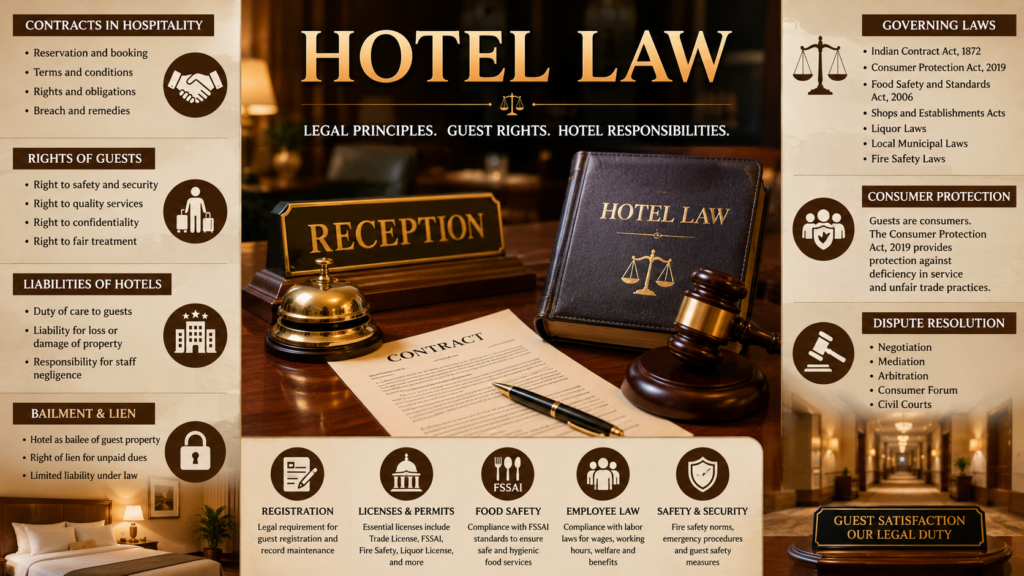
(c) Discuss how advance bookings and hotel reservations create a contractual relationship between guests and hotel establishments.
(d) Mention any two important licenses necessary for running hotel businesses in India.
(e) Explain the functions and responsibilities of the Food Safety and Standards Authority of India (FSSAI) in ensuring food safety compliance.
(f) Evaluate the importance of the Consumer Protection Act, 2019 in safeguarding the interests of consumers within the hospitality sector.
(g) Describe the concept of bailment and explain its significance in determining hotel liability for guests’ belongings.
(h) Define a contract of warranty and examine its application in hotel and hospitality operations.
(i) Distinguish between express and implied contracts with suitable illustrations from hotel and catering services.
(j) Discuss the statutory requirements relating to guest registration and maintenance of hotel records under hospitality laws.
(k) State any two permits required for conducting entertainment or recreational activities within hotel premises.
(l) Explain the objectives and major functions of the Food Safety and Standards Act, 2006.
(m) Discuss the procedure available under the Consumer Protection Act, 2019 for resolving consumer complaints and grievances.
(n) Explain the meaning of a hotelier’s right of lien and discuss its relevance in hospitality law.
PART – B
Q.2
Critically examine the nature, scope, and classification of business contracts operating within the hotel industry along with their legal consequences.
Q.3
Discuss the application of contractual principles in resolving disputes arising from hotel overbooking, cancellation of reservations, and breach of booking agreements.
Q.4
Explain the different licenses and permissions required for hotel and catering establishments in India and discuss the procedure for obtaining and renewing them.
Q.5
Critically analyze the legal provisions regulating liquor licensing in hotels, including restrictions relating to timing, quantity, and operational compliance.
Q.6
Discuss the legal framework governing food safety in India with special reference to the Food Safety and Standards Act, 2006 and regulations framed by FSSAI.
Q.7
Examine the role of Food Safety Management Systems (FSMS) and hygienic practices in maintaining legal compliance within hospitality establishments.
Q.8
Evaluate the role of consumer protection laws and related commercial legislations in regulating hotel services and protecting customer rights.
Q.9
Discuss the legal rights, obligations, and liabilities of hotel proprietors in relation to guests, employees, and public safety requirements.
Q.10
Analyze the legal implications of terms and conditions imposed in hotel services, particularly with respect to cancellations, refunds, and service charges.
Q.11
Examine the contractual and legal issues arising when guests leave hotel premises without payment or cause damage to hotel property.
Q.12
Discuss the procedure relating to the grant, renewal, suspension, and cancellation of licenses applicable to hotel establishments under municipal and regulatory laws.
Q.13
Evaluate the regulatory framework governing licenses and permits relating to music, dancing, gaming, entertainment activities, and tobacco use in hotels.
Q.14
Examine the legal provisions concerning food adulteration and food safety with reference to the Prevention of Food Adulteration Act, 1954 and FSSAI standards.
Q.15
Discuss how the principles of Food Safety Management Systems (FSMS) can be implemented to ensure adherence to food safety standards in hotels and catering units.
Q.16
Analyze the relevance and applicability of the Shops and Establishments Act in regulating labor welfare, wages, and working conditions in hotels.
Q.17
Discuss the legal provisions relating to health, fire, and safety regulations applicable to hotel establishments and evaluate their significance in ensuring guest safety.