Written by Nimisha Arora student of BA LLB (HONS) III SEMESTER at K.R Mangalam University.
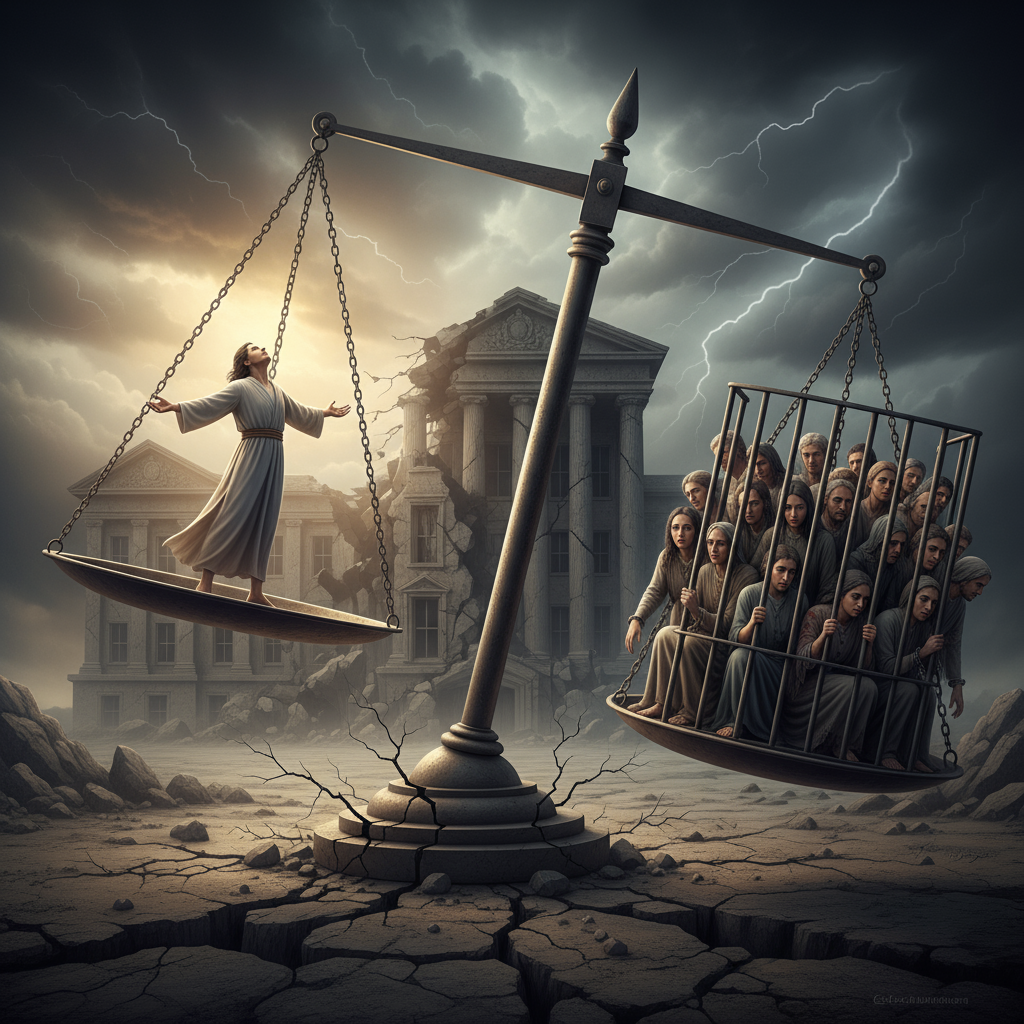
India’s criminal justice system was created to protect rights, punish wrongdoing and give every citizen a fair hearing. Yet in reality, it often feels like a maze where the powerful walk free and the ordinary person is lost. Courtrooms meant to uphold the truth are weighed down by delays, loopholes and political influence. Bail, weak investigations, and threats to witnesses have turned justice from a right into a privilege. These are not small flaws but cracks running through the whole structure, allowing fear and inequality to seep in. Behind every high-profile case are countless victims who lose faith in the system before their cases are even heard. Without bold reform and real accountability, the promise of equal justice will remain a distant dream rather than a lived reality. Unless we face these truths honestly, the scales of justice will keep tipping away from the very people they were built to protect.
The Abuse of Bail
Bail is intended to safeguard the right to liberty, yet in India, it tends to function more as a privilege for the rich or well-connected. Courts often misuse their discretion and release on bail people who can intimidate victims or destroy evidence. This doesn’t merely warp the concept of justice — it distorts it. When bail is treated casually, it undermines the trust of victims and the faith of society in the legal process.
Weak Investigations and Evidence
Another issue is the manner in which investigations are conducted. Cases too frequently are constructed on weak or incomplete evidence. If police do not obtain robust evidence, courts are left with shaky foundations for conviction. That is not a technical defect — it results in guilty individuals going free while victims receive nothing. Weak evidence doesn’t just lose a case; it fails justice.
The Danger to Witnesses
Witnesses are the pillars of most trials, but they are also the weakest link. Threats, intimidation, and sometimes violence drive most witnesses to remain silent. India’s witness protection mechanisms remain fragile, enabling criminals to control results. When witnesses are not free to speak, trials become mere acts where the truth gets buried. This tilt makes the justice system a protector for criminals rather than a shield for people.
The Power of Crime and Politics
Intimacy between politics and crime in India is another serious threat. Archaic laws and political patronage enable the powerful to go scot-free. Politically influential criminals can manipulate the system, delay trials, and quash opposition. This is not just corruption — it is a blow to the concept of equality before the law. When the powerful play by a different set of rules, justice for the average citizen is a mere illusion.
The Bigger Systemic Failures
All of these problems are ultimately rooted in a more fundamental failure: the out-of-date and inflexible legal system itself. Too many laws are anachronistic and no longer respond to contemporary society. Rather than shielding people, they provide loopholes for exploitation. Reforms have been too gradual, and the absence of accountability has emboldened those who feed on these flaws. Unless the system is overhauled and made more stringent in safeguarding rights and punishing crime, justice will move further out of reach.
Conclusion
The abuse of bail, shoddy evidence, intimidation of witnesses, and power-politics linkage all reflect how vulnerable India’s justice system has grown to be. These are not trivial defects but cracks in the structure through which injustice can seep. The more these cracks are neglected, the larger they become. If India desires a system of faith, reforms can wait no further. Law has to be applied sternly, investigations need to be firmer, and witnesses need to be safeguarded. Most importantly, political influence should never be permitted to cover up crime. Justice cannot survive in half-measures — it must be firm, fair, and fearless. Only then can the system serve not just the powerful, but every citizen.