Introduction
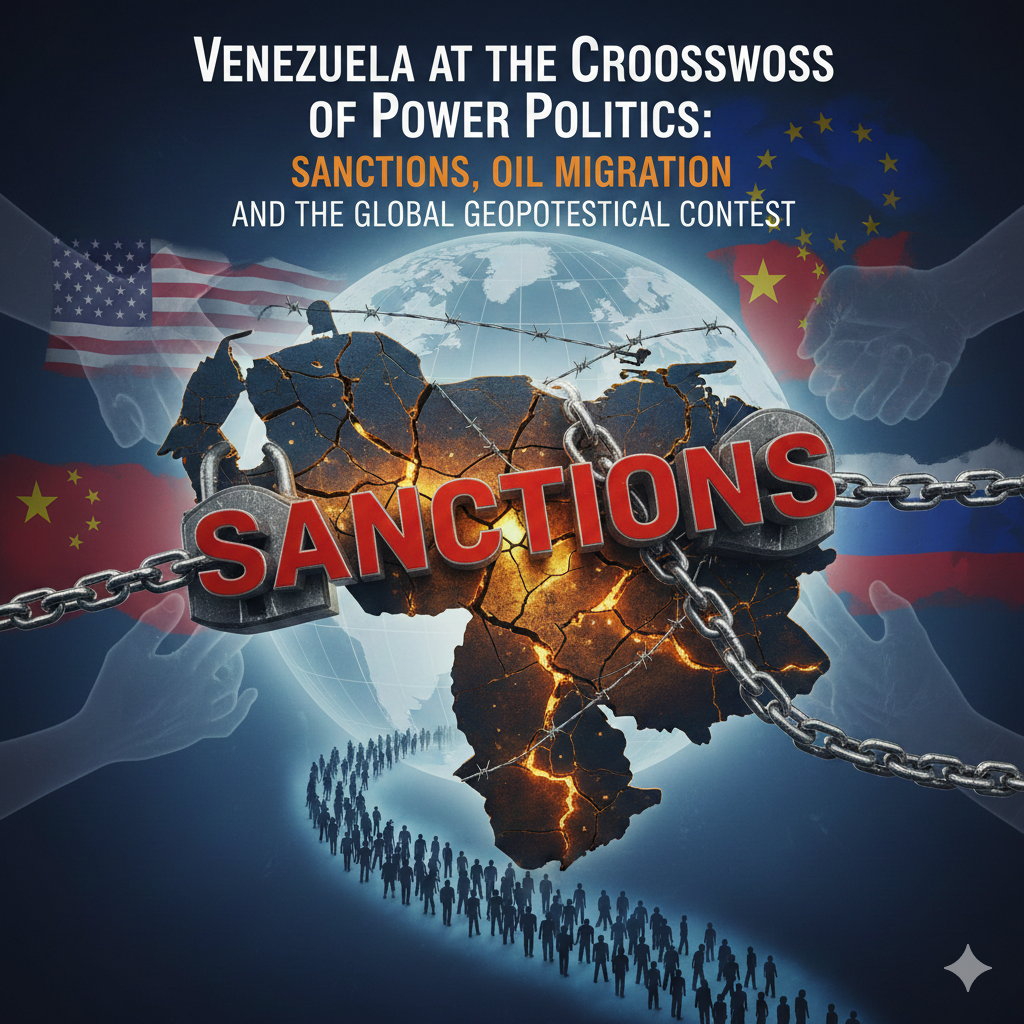
The crisis in Venezuela is one of the most complex and long-running geopolitical crises of the 21st century. It is not merely a story of economic collapse or political authoritarianism, nor can it be reduced to allegations of criminality against a single leader. Instead, Venezuela represents a convergence point of energy politics, failed economic sanctions, mass migration, and great-power rivalry, particularly between the United States and its strategic competitors.
At the center of this storm stands President Nicolás Maduro, whose government has faced sustained pressure from Washington through diplomatic isolation, economic sanctions, and criminal indictments. Over time, multiple narratives have emerged—some official, some speculative—about the possibility of direct U.S. action against the Venezuelan leadership.
This blog does not rely on unverified claims. Instead, it critically examines the official justifications, structural realities, and deeper geopolitical motivations that explain why Venezuela continues to occupy such a prominent place in global strategic calculations.
I. From Oil Powerhouse to Economic Collapse
Venezuela was once one of Latin America’s most prosperous nations. Its economy was built almost entirely around oil exports, managed through the state-owned oil company PDVSA. For decades, oil revenues funded social programs, subsidies, and public employment.
However, this extreme dependence on oil created structural vulnerabilities:
- Little diversification of the economy
- Heavy reliance on state control
- Exposure to global oil price fluctuations
When oil prices collapsed in the mid-2010s, Venezuela’s economic model imploded. Hyperinflation, currency devaluation, shortages of food and medicine, and the collapse of public services followed. While internal policy failures played a central role, external pressures—especially sanctions—accelerated the breakdown.
II. U.S. Sanctions: Objectives and Consequences
The United States adopted a strategy of maximum pressure against Venezuela, particularly after 2017. These sanctions targeted:
- Venezuela’s oil exports
- Access to international financial markets
- Assets and accounts of government officials
Intended Goals
The stated objectives were:
- To pressure the Maduro government to restore democracy
- To weaken the ruling elite financially
- To trigger political transition through internal pressure
Actual Outcomes
In practice, the results were different:
- Government revenues collapsed
- Public welfare systems disintegrated
- Ordinary citizens bore the brunt of economic pain
Despite immense hardship, the Maduro government remained in power, supported by security forces and international allies. This outcome raised a critical question for U.S. policymakers: What if sanctions alone cannot achieve regime change?
III. Allegations of Narco-Terrorism and Criminalization of the State
One of the most controversial aspects of U.S. policy toward Venezuela has been the criminal indictment of senior Venezuelan leaders under U.S. law. These charges include allegations of:
- Narco-terrorism
- Large-scale drug trafficking
- Collaboration with international criminal networks
By framing Venezuela’s leadership as a criminal organization, the U.S. effectively shifted the issue from diplomacy to law enforcement. This approach carries major implications:
- It delegitimizes the government internationally
- It bypasses traditional state-to-state engagement
- It redefines sovereignty through a criminal justice lens
Critics argue that this sets a dangerous precedent, where powerful states claim legal jurisdiction over foreign leaders without international judicial processes.
IV. The Migration Crisis: Humanitarian Tragedy and Political Tool
The Venezuelan collapse has produced one of the largest migration crises in modern history, with over seven million people fleeing the country.
Regional Impact
Most migrants settled in Latin America, straining:
- Colombia
- Peru
- Ecuador
- Brazil
U.S. Domestic Politics
A smaller but politically significant number attempted to enter the United States. In U.S. discourse:
- Migration became linked to border security
- Venezuela was portrayed as an exporter of instability
- Crime and gang narratives were amplified
This transformed Venezuela from a foreign policy issue into a domestic political pressure point, especially during election cycles.
V. Venezuela’s Oil: The Strategic Core of the Crisis
At the heart of Venezuela’s geopolitical importance lies its oil.
World’s Largest Proven Reserves
Venezuela possesses the largest proven oil reserves globally, exceeding 300 billion barrels, primarily in the Orinoco Belt. This alone ensures permanent international attention.
Energy and Power
Oil is not just an economic resource—it is a geopolitical instrument. Control over oil flows affects:
- Global prices
- Energy security
- Strategic alliances
A sanctioned Venezuela redirected much of its oil trade toward China, reducing Western leverage. For the United States, this raised concerns not only about lost economic access but about strategic rivals consolidating influence in the Western Hemisphere.
VI. Alignment with U.S. Strategic Rivals
Under Maduro, Venezuela deepened ties with countries opposed to U.S. global dominance:
- Russia: military cooperation, arms supplies, strategic signaling
- China: oil-backed loans, infrastructure projects, long-term economic influence
- Iran: sanctions evasion mechanisms, energy collaboration
- Cuba: intelligence and internal security assistance
This alignment placed Venezuela firmly within a counter-Western geopolitical network, challenging U.S. influence in what it historically considered its sphere of influence.
VII. Why Leadership Targeting Replaces Military Intervention
Direct military intervention in Venezuela would carry enormous costs:
- Regional destabilization
- Humanitarian catastrophe
- International legal challenges
As a result, modern geopolitical strategy often favors leadership targeting over invasion. This includes:
- Legal indictments
- Diplomatic isolation
- Asset freezes
- Information warfare
Such strategies aim to decapitate political authority without triggering open war. Whether effective or ethical remains deeply contested.
VIII. International Law and Sovereignty: A Troubling Debate
Actions against a sitting head of state raise serious legal questions:
- Does criminal conduct override sovereign immunity?
- Who has jurisdiction over alleged international crimes?
- Can unilateral actions replace multilateral legal mechanisms?
Supporters argue that no leader should be above the law. Critics counter that selective enforcement undermines the international legal order, especially when applied by powerful states without neutral judicial oversight.
Conclusion: Venezuela as a Mirror of the Global Order
The Venezuelan crisis is not simply about Nicolás Maduro, socialism, or misgovernance. It is a reflection of how power operates in the modern international system—where economic pressure, legal narratives, energy security, and geopolitical rivalry intersect.
Sanctions failed to produce political transition. Migration exposed humanitarian costs. Oil ensured strategic relevance. Alliances reshaped regional power balances. Together, these forces turned Venezuela into a testing ground for 21st-century geopolitics.
Understanding Venezuela, therefore, requires moving beyond slogans and sensational claims. It demands a recognition that behind every headline lies a complex struggle over resources, influence, and the future shape of global power.