
Definitions under the Information Technology Act, 2000
The Information Technology Act, 2000 lays down a series of crucial definitions that form the conceptual backbone of India’s cyber law framework. These definitions are drafted broadly and in technology-neutral language so that the Act can accommodate future developments in digital and communication technologies.
The Act defines a computer as any electronic or similar device that performs logical, arithmetic, or memory functions. A computer system includes data, programs, and input/output elements functioning together, whereas a computer network refers to interconnected computers capable of sharing resources or data. These wide definitions ensure that the Act applies to everything from desktops and servers to modern cloud infrastructures.
An electronic record is defined to include data, text, images, sound, video, or any information generated, sent, received, or stored in electronic form—whether using magnetic, optical, or any other media. This definition is important because it confers legal recognition to digital documents, making them admissible as evidence under the Indian Evidence Act.
The Act also defines an intermediary, a term covering entities such as ISPs, social media platforms, marketplaces, payment gateways, and other service providers that store, transmit, or provide access to information on behalf of others. By defining intermediaries broadly, the Act ensures that liability and compliance obligations can be imposed appropriately in matters involving unlawful content, data breaches, or cyber offences.
These definitions are vital for interpreting the Act, determining responsibilities of various actors in cyberspace, and ensuring clarity when applying legal standards to digital transactions.
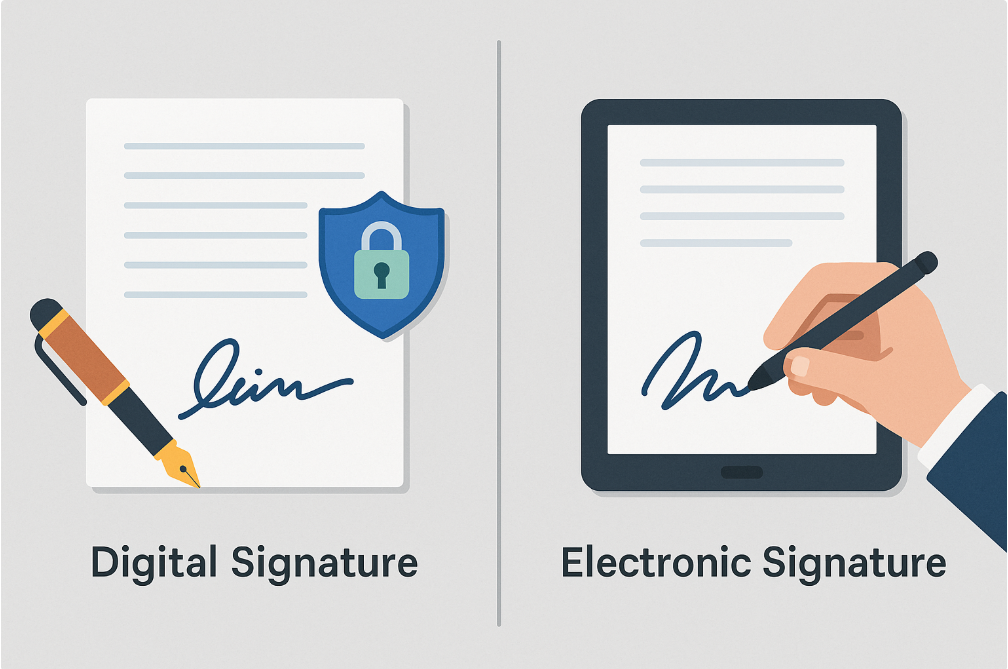
Digital Signature
A digital signature is a form of electronic authentication that uses asymmetric cryptography to ensure the authenticity, integrity, and non-repudiation of electronic records. Under the IT Act, a digital signature is created by applying a private key to an electronic record, and verified by using the corresponding public key stored in a Digital Signature Certificate issued by a licensed Certifying Authority.
This cryptographic method ensures that the signed document cannot be altered without detection and that the signature genuinely originates from the person who holds the private key. A digital signature, therefore, gives an electronic record the same legal validity as a handwritten signature or seal under traditional contract law. It is widely used for filing income tax returns, MCA filings, e-tenders, banking transactions, and secure official communication.
The reliability of a digital signature depends on strict key management practices and regulatory oversight by the Controller of Certifying Authorities, who licenses and supervises Certifying Authorities that issue Digital Signature Certificates. Because of this regulatory framework, digital signatures hold high evidentiary value and serve as a secure foundation for electronic commerce and e-governance.
Electronic Signature
While a digital signature is a specific type of electronic signature based on cryptography, the IT Act (after the 2008 amendment) introduced a broader category called “electronic signature.” An electronic signature means any method of authentication of an electronic record as prescribed by the Central Government, ensuring reliability and security similar to a digital signature.
This definition allows the adoption of new and evolving authentication technologies without amending the Act each time. For example, the government has recognized the Aadhaar-based e-sign, where authentication is carried out through Aadhaar OTP or biometric verification. Unlike cryptographic digital signatures that require key pairs and Digital Signature Certificates, electronic signatures may rely on identity verification technologies, one-time passwords, biometrics, or other secure methods.
The legal validity of electronic signatures is based on two factors:
(1) The method must be reliable, meaning it uniquely identifies the signatory and is linked to their control;
(2) It must be approved or notified by the government.
This innovation expands the usability of electronic transactions, enabling individuals without cryptographic key infrastructure to execute legally valid electronic agreements, affidavits, and applications. Electronic signatures support mass adoption of e-governance and digital service delivery while maintaining security and authenticity.