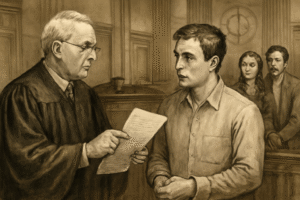
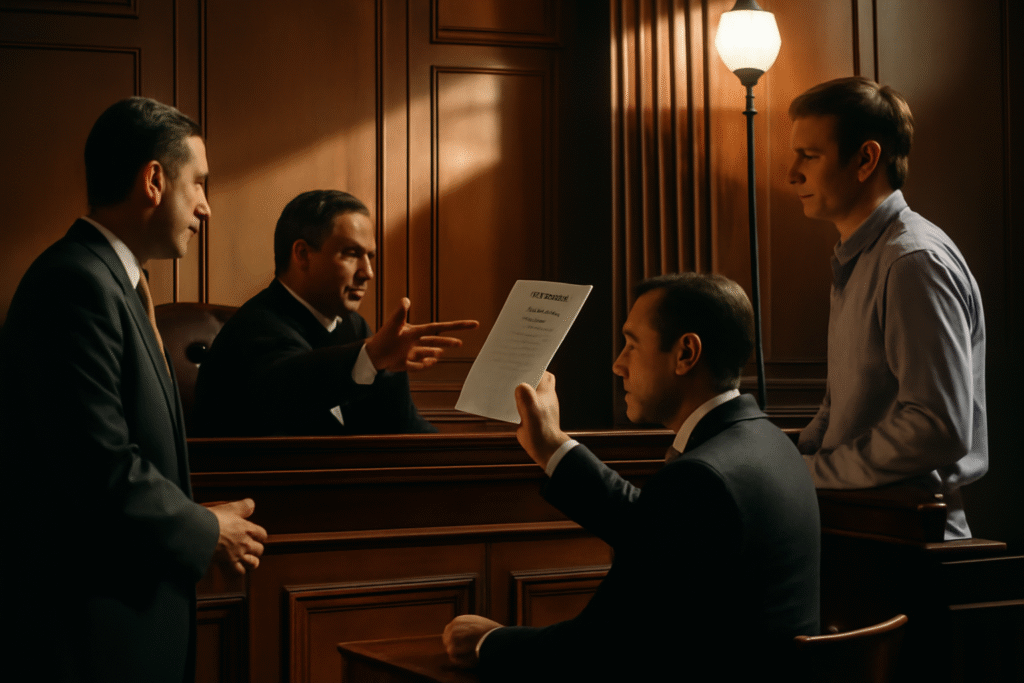
The Supreme Court of India has delivered an important ruling clarifying the evidentiary treatment of “court witnesses,” i.e., witnesses summoned by the court under its powers conferred by Section 311 of the Code of Criminal Procedure (CrPC) and Section 165 of the Indian Evidence Act. The bench comprising Justice Sudhanshu Dhulia and Justice Prashant Kumar Mishra held that the prosecution cannot contradict a court witness with previous statements made to the police under Section 161 CrPC.
The Court emphasized that while court witnesses may be cross-examined by either party, this can only be done with the permission of the court and must remain limited to the answers provided by the witness in response to the court’s own questions. The bench clarified that Section 162(1) CrPC expressly allows the defence to use previous police statements of prosecution witnesses for contradiction during cross-examination, and also permits the prosecution to contradict its own witnesses with the court’s leave. However, this framework does not extend to court witnesses, who stand on a different footing.
Significantly, the Court underlined that its own powers under Section 165 of the Evidence Act are wide and unrestricted. A judge may, on their own motion, put questions to a court witness and even contradict them with their earlier police statements if doing so is necessary for the discovery of truth. This power, the bench noted, is not curtailed by Section 162 of the CrPC. The judgment referred to earlier precedents, including Mahabir Mandal v. State of Bihar (1972) and Dipakbhai Jagdishchandra Patel v. State of Gujarat (2019), to reinforce this interpretation, while also citing Raghunandan v. State of U.P. (1974) to affirm the court’s authority to interrogate witnesses freely.
The decision arose from the notorious “Kannagi-Murugesan” honour killing case in Tamil Nadu, where a young inter-caste couple—Murugesan, a Dalit chemical engineer, and Kannagi, a commerce graduate from the Vanniyar community—were poisoned by Kannagi’s father and brother after secretly marrying in May 2003. Following their death, their bodies were burned to destroy evidence. During trial, the prosecution moved an application under Section 311 CrPC to summon Murugesan’s stepmother (PW-49) as an additional witness, as she had been an eyewitness to the incident but was not included in the original chargesheet.
This move was contested by the defence, who argued that she should have been examined as a court witness rather than a prosecution witness, as there was a risk she might turn hostile. The Supreme Court, however, drew a clear distinction between summoning an additional witness under Section 311 and calling a witness as a court witness. The bench clarified that the former category allows for ordinary cross-examination by both sides, whereas the latter restricts questioning to what the court permits, thereby reducing the scope for the prosecution to contradict the witness with prior police statements.
Ultimately, the Court upheld the convictions of eleven accused persons, including Kannagi’s father, confirming the life sentences imposed by the Madras High Court in 2022. It also dismissed the appeals filed by two policemen convicted of fabricating evidence and directed the payment of ₹5 lakhs in compensation to Murugesan’s father and stepmother.
This ruling is significant as it reinforces the procedural distinction between additional witnesses and court witnesses, while simultaneously reaffirming the judiciary’s special powers under Section 165 of the Evidence Act to elicit truth even when the parties are procedurally constrained.
Case Citation: KP Tamilmaran v. State, SLP (Crl) No. 1522 of 2023 (Supreme Court of India).