
Written by Prashant Panwar
A Dramatic Escalation
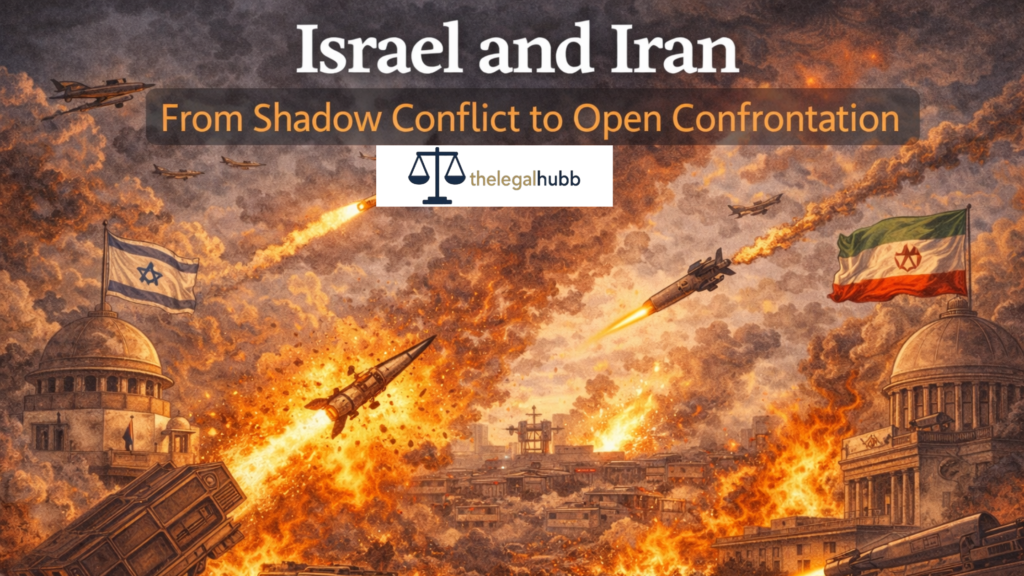
West Asia has entered a dangerously volatile phase following the killing of Iran’s Supreme Leader, Ayatollah Ali Khamenei, in U.S. and Israeli strikes. In swift retaliation, Iran launched missile attacks against Israel and U.S. military bases, marking one of the most direct confrontations between the two sides in recent history.
According to reports, Iranian authorities stated that more than 200 people have been killed since the beginning of U.S. and Israeli bombardment. Explosions in Tehran sent plumes of smoke over areas housing government buildings, while Iranian state television claimed it was directly targeted. The scale and symbolism of these strikes signal that the long-running shadow war has now erupted into overt military engagement 2 March.
Expanding Theatre of War
Iran’s retaliation reportedly involved ballistic missile launches aimed at an expanding list of targets in Israel and certain Gulf Arab states. In Israel, missile impacts and interceptions were heard in Tel Aviv. Israeli rescue services confirmed civilian casualties, including fatalities following a strike on a synagogue in Beit Shemesh.
The U.S. military also acknowledged casualties among its personnel, reflecting the widening scope of the conflict. The Pentagon described its campaign as “Operation Epic Fury,” while Israel named its offensive “Operation Roar of the Lion.” Iran’s missile response was reportedly carried out under the title “True Promise 4.”
The formal naming of operations on all sides underscores that this is no longer sporadic retaliation but structured military escalation 2 March.
Leadership Decapitation and Retaliatory Logic
The killing of Ayatollah Khamenei represents a dramatic escalation in strategic targeting. Leadership decapitation strikes are intended to disrupt command structures and weaken political resolve. However, they also carry immense symbolic weight and often trigger forceful retaliation.
Iran vowed revenge immediately after the assassination. The leadership vacuum, combined with nationalist sentiment, has hardened Tehran’s posture. At the same time, U.S. President Donald Trump warned that any Iranian retaliation would lead to further escalation, while also indicating that dialogue channels might remain open.
The contradictory signals — threats of intensified strikes alongside tentative offers of talks — reflect the unpredictability of crisis diplomacy.
Regional Implications
The conflict’s geography extends beyond Israel and Iran. The involvement of U.S. bases in the region raises the stakes considerably. Gulf Arab states find themselves strategically exposed, given their proximity to both Iranian missile capabilities and American military installations.
Maritime routes, particularly in the Strait of Hormuz and the Red Sea region, remain vulnerable. Any prolonged escalation could disrupt global energy markets and international trade flows.
For regional powers, this confrontation tests alliances, security doctrines and crisis management capacities.
The Two-State Question and Broader Context
The term “two-state solution” often surfaces in discussions concerning Israel and Palestine. However, the present conflict demonstrates that West Asian geopolitics cannot be reduced to a single axis. The Israel–Iran rivalry operates alongside, and sometimes intersects with, the Israeli–Palestinian question, regional proxy dynamics and global power competition.
This escalation risks overshadowing fragile diplomatic initiatives and may further polarise regional alignments.
Strategic Uncertainty Ahead
Military escalation rarely follows linear logic. Retaliation invites counter-retaliation. The scale of operations already undertaken suggests both sides are prepared for sustained engagement. However, prolonged warfare carries immense political, economic and humanitarian costs.
Diplomatic backchannels may continue even amid public hostility. Historically, crises of this magnitude often oscillate between brinkmanship and negotiation.
The central question remains whether deterrence will stabilise the situation or whether further miscalculations will push the region into deeper conflict.
Conclusion: A Fragile Regional Order
The Israel–Iran confrontation marks a pivotal moment in West Asian geopolitics. What was once conducted through proxies and covert operations has moved into direct military engagement. Casualties on multiple sides, formalised operations and expanding targets indicate a dangerous threshold has been crossed.
The coming weeks will determine whether this conflict remains contained or spirals into a broader regional war. In a region already defined by fragile balances and strategic rivalries, the margin for error is narrowing rapidly.
Stability now depends not only on military calculations but on diplomatic restraint.