Written by Himanshu Sharma
Introduction
India’s Constitution promises equality, dignity, and fraternity to every citizen, irrespective of region, race, language, or appearance. Yet, for many citizens from the North-Eastern states, the lived reality often contrasts sharply with these constitutional ideals. Over the years, incidents of racial abuse, physical violence, social exclusion, and stereotyping against North-Eastern citizens in metropolitan cities have repeatedly surfaced, raising serious concerns about internal discrimination.
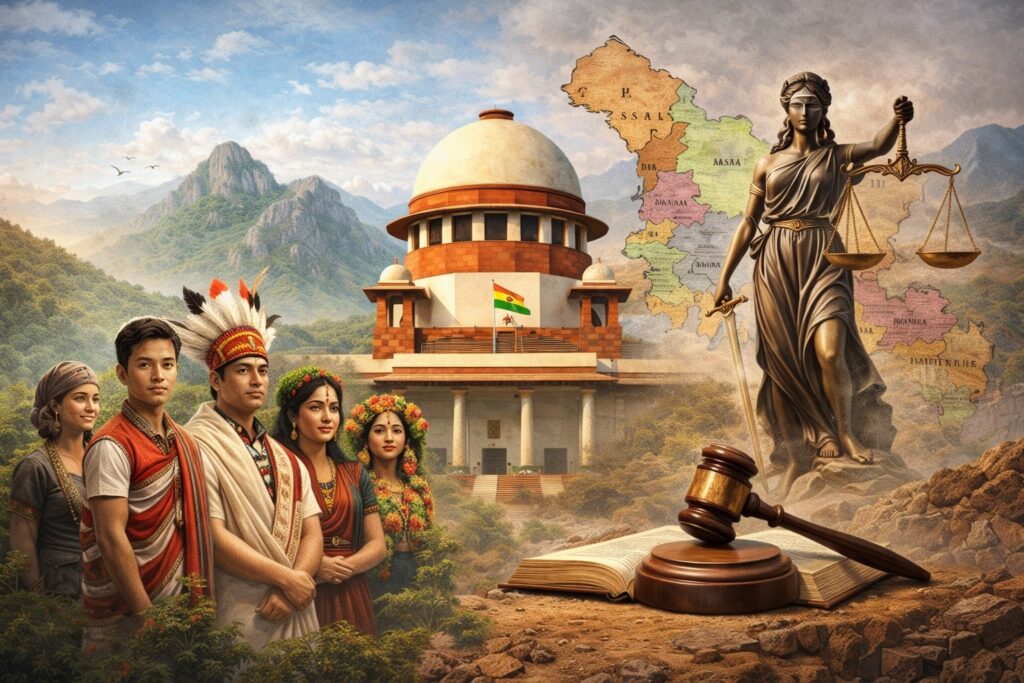
A recent Public Interest Litigation (PIL) filed before the Supreme Court of India underscores this concern, seeking judicial intervention to address racial violence targeting North-Eastern citizens. This PIL not only highlights systemic discrimination but also calls upon the Court to reaffirm the Constitution’s commitment to equality, human dignity, and protection from racial harm.
Background: Racial Violence Against North-Eastern Citizens
Citizens from North-Eastern states such as Assam, Manipur, Nagaland, Mizoram, Meghalaya, Tripura, and Arunachal Pradesh have long faced racial profiling and discrimination across India. Physical features, cultural practices, and linguistic differences often make them targets of harassment, racial slurs, and even physical attacks.
A tragic illustration of this persistent problem is the case of Anjel Chakma, a 24-year-old MBA student from Tripura, who succumbed to grievous injuries after a racially motivated attack in Dehradun in December 2025. Chakma, who had moved to Dehradun for higher studies, was stabbed in front of his younger brother, Michael. His final words, “We are Indians. What certificate should we show to prove that?” poignantly reflected the stark reality of racial discrimination despite constitutional guarantees.
Such incidents, including earlier cases like the death of Nido Taniam in 2014, highlight a disturbing pattern of racial violence against North-Eastern citizens. Despite the existence of constitutional safeguards, the recurrence of these crimes indicates deep-rooted prejudice and institutional inadequacy.
The PIL Before the Supreme Court
Filed on December 28, 2025, in the aftermath of Anjel Chakma’s killing, the PIL seeks judicial intervention to address what it calls the “continuing constitutional failure” to prevent and respond to racial discrimination and violence. The petition, filed by Delhi-based lawyer Anoop Prakash Awasthi, names the Centre and all states and Union territories as parties.
The PIL invokes Articles 14, 19(1)(a) & (g), and 21, seeking writs under Article 32 to ensure protection against racial discrimination, strengthen legal safeguards, sensitize law enforcement, and create institutional mechanisms for redressal. The plea also emphasizes the need for:
- Recognizing racial slurs as a separate category of hate crimes.
- Establishing dedicated nodal agencies or commissions at both central and state levels for reporting and addressing racial crimes.
- Creating special police units in districts and metropolitan areas to handle racial violence.
- Organizing educational initiatives like workshops and debates to raise awareness about racial discrimination.
The PIL stresses that crimes like Chakma’s are not isolated incidents, but part of a longstanding pattern of abuse, reflecting systemic neglect and the absence of a dedicated legislative or institutional framework.
Constitutional and Legal Framework
Article 14: Equality Before Law
Racial discrimination against North-Eastern citizens directly violates equality before the law. When law enforcement fails to act promptly or impartially, it compounds the violation, denying equal protection.
Article 15: Prohibition of Discrimination
Article 15 prohibits discrimination based on religion, race, caste, sex, or place of birth. The PIL highlights the urgent need to interpret this provision broadly to recognize racial violence, even when committed by private individuals.
Article 21: Right to Life and Dignity
Article 21 guarantees the right to life and personal liberty, judicially expanded to include the right to live with dignity. Racial abuse, physical violence, and social exclusion strike at the core of human dignity, making systemic racial violence a direct constitutional violation.
Role of the Supreme Court and PIL Jurisdiction
The Supreme Court, through its PIL jurisdiction, has historically played a transformative role in addressing social injustice and protecting marginalized groups. In the present case, judicial intervention is crucial due to the inadequacy of executive and legislative measures. The Court has the opportunity to issue guidelines, policy directions, and accountability measures that can meaningfully protect North-Eastern citizens from racial violence.
Human Rights Perspective
Racial violence against North-Eastern citizens violates both domestic constitutional norms and India’s international human rights obligations. Internal discrimination undermines India’s commitment to pluralism and unity in diversity, emphasizing that human rights violations are not only external issues but exist within the nation’s own social fabric.
Challenges in Addressing Racial Violence
Despite judicial interventions, several challenges persist:
- Under-reporting of incidents due to fear, mistrust, or social pressure.
- Lack of sensitivity among law enforcement agencies.
- Absence of specific anti-racial discrimination legislation.
- Social normalization of racial stereotypes.
Judicial directions alone cannot eliminate these challenges unless accompanied by institutional reforms and societal change.
Way Forward
A comprehensive response requires a multi-layered approach:
- Strengthening police accountability and sensitivity training.
- Establishing dedicated grievance redressal mechanisms.
- Effective enforcement of existing criminal laws.
- Awareness campaigns promoting constitutional values of fraternity.
- Judicial monitoring to ensure compliance with directives.
The Supreme Court’s intervention can act as a catalyst for reforms, reinforcing that constitutional dignity is non-negotiable.
Conclusion
The PIL on racial violence against North-Eastern citizens forces the nation to confront uncomfortable truths about internal discrimination. By addressing such violence through a constitutional lens, the judiciary reinforces the principle that every citizen—regardless of region, race, or appearance—is entitled to equal respect and protection under the law. Restoring constitutional dignity is a shared responsibility of the courts, the State, and society alike.