
Written by Prof (Dr.) Shobhna Jeet
Introduction
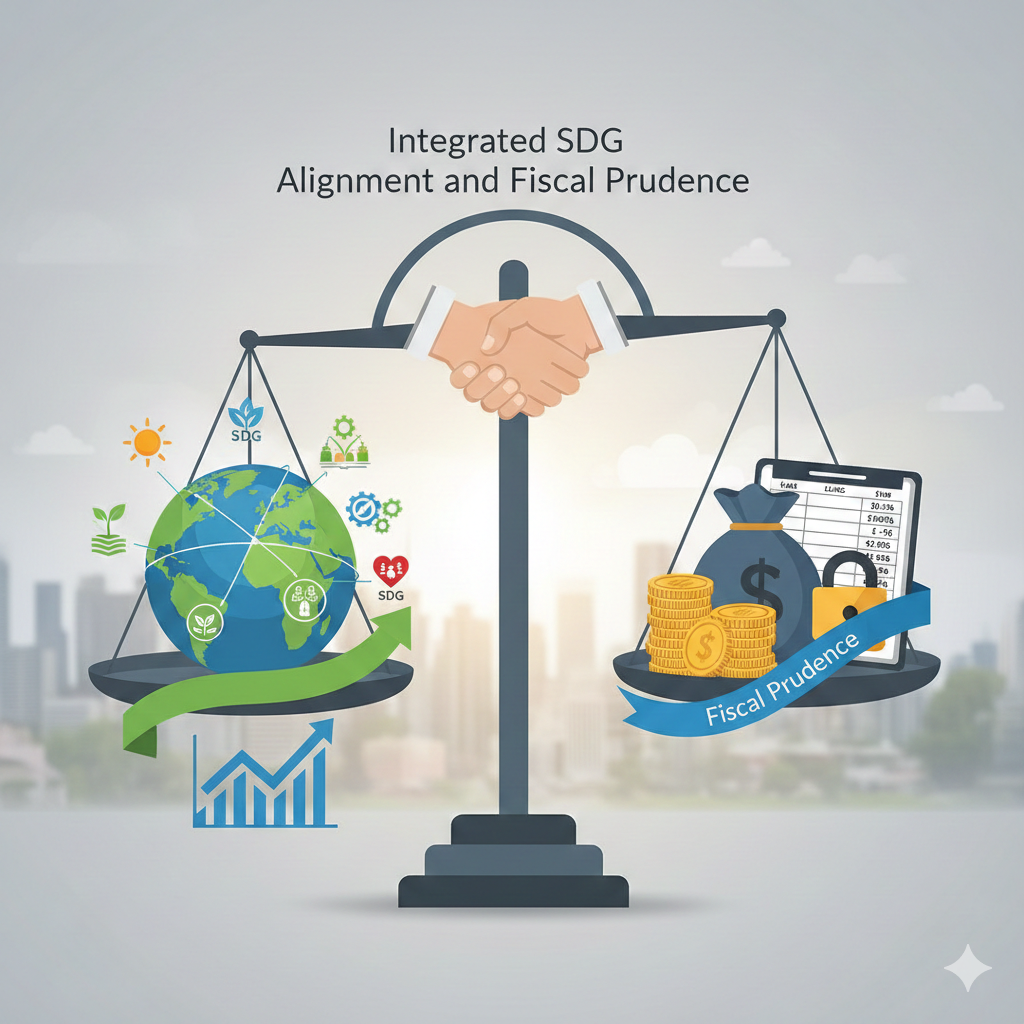
Fiscal prudence and alignment with integrated Sustainable Development Goals (SDGs)The Union Budget for 2025–2026 effectively balances cost containment with economic stimulation. The fiscal deficit is projected to reach 4.4% of GDP. Total expenditure is projected to be ₹50.65 lakh crore, while total revenue (excluding borrowing) is anticipated to be ₹34.96 lakh crore. This indicates the government’s commitment to maintaining fiscal discipline while simultaneously promoting robust economic growth. The budget incorporates the Sustainable Development Goals (SDGs) within its sectoral priorities, underscoring their significance. The investments and reforms in infrastructure, labor legislation, health, education, and agriculture directly support the SDG goals rather than treating sustainability as a separate concern. In the fields of agriculture and rural development, it is essential to ensure food security, maintain climate stability, and facilitate poverty alleviation.
Agriculture remains a fundamental driver of inclusive growth. The PM Dhan-Dhaanya Krishi Yojana aims to assist approximately 1.7 crore farmers by enhancing irrigation systems, storage facilities, productivity, and access to loans across 100 districts characterized by low agricultural yields. This program directly contributes to SDG 1 (No Poverty) by enhancing rural livelihoods and promoting economic stability. Improving storage systems enhances the sustainability of food systems and contributes to Sustainable Development Goal 2 (Zero Hunger) by increasing productivity and minimizing post-harvest losses. The focus on irrigation efficiency and resource optimization aligns with Sustainable Development Goals 6 (Clean Water and Sanitation) and 13 (Climate Action), particularly in fostering agriculture resilient to climate change.
The Mission for Aatmanirbharta in Pulses aims to achieve self-sufficiency in Tur, Urad, and Masoor, thereby reducing import dependency and improving domestic food security, in alignment with SDG 2. The five-year Mission for Cotton Productivity aids in climate adaptation and responsible production under SDG 12 by integrating new technologies with sustainable farming practices. Raising the Kisan Credit Card (KCC) loan limit for farmers, fishermen, and dairy enterprises from ₹3 lakh to ₹5 lakh facilitates access to credit. This enhances the productivity of rural enterprises, thereby contributing to SDG 8 (Decent Work and Economic Growth), and facilitates access to institutional credit, which supports SDG 1.
Health care
Increased social protection, equity, and capability the budget significantly enhances the public health system. Increasing the number of undergraduate and graduate medical seats by 10,000, targeting a total of 75,000 seats over five years, will address the deficit of doctors and nurses. This investment in individuals facilitates access to healthcare and enhances quality, thereby directly contributing to Sustainable Development Goal 3 (Good Health and Well-Being). Establishing 200 Day Care Cancer Centres within district hospitals facilitates access to specialized care for individuals in proximity to their residences. The government is advancing the goal of universal health coverage in SDG 3 by decentralizing cancer treatment services across various regions of the country. This facilitates access to necessary assistance for individuals across the nation. Gig workers are now eligible for the Pradhan Mantri Jan Arogya Yojana and additional benefits pertaining to health and social security. This indicates that labourers engaged in platform work or informal employment are now afforded protection. This initiative not only contributes to SDG 3 but also advances SDG 8 by enhancing workers’ rights and integrating them into social security systems.
Quality Education
Enhancing education and skill development involves advancing quality, equity, and innovation. The establishment of 50,000 Atal Tinkering Labs in schools facilitates experiential learning, fosters inventive ideas, and enhances robotics and STEM education. This directly supports SDG 4 (Quality Education) by facilitating children’s study and promoting innovative thinking and problem-solving skills. Bharat Net’s broadband initiative for secondary schools addresses the digital divide between urban and rural areas. Digital infrastructure ensures equitable access to online instructional materials for all users. Digital transformation enhances Sustainable Development Goal 4 and reinforces Sustainable Development Goal 9, which focuses on industry, innovation, and infrastructure.
The Bharatiya Bhasha Pustak Scheme facilitates access to books and educational resources in various Indian languages. This contributes to the two main objectives of SDG 4: promoting language diversity and ensuring equal learning opportunities. These factors contribute to workforce preparation and support SDG 8 by ensuring that education aligns with future skills and demands. In the long term, the economy is expected to continue its upward trajectory due to innovations, enhanced infrastructure, and optimizations in organizational structures. The allocation of ₹11.21 lakh crore for capital expenditure indicates a continued emphasis on growth via infrastructure development. Investment in transportation, logistics, urban development, digital connectivity, electricity transmission, and the modernization of the financial system enhances economic competitiveness and productivity. These investments align with SDG 9 (Industry, Innovation, and Infrastructure) by facilitating the development of robust infrastructure and fostering ecosystems that promote innovative ideas. The construction of new infrastructure generates employment opportunities, thereby contributing to the achievement of Sustainable Development Goal 8. Modifications to taxation, energy, mining, and regulations facilitate business operations and increase private sector employment. The implementation of these reforms, alongside advancements in digital governance and modernization of the financial sector, facilitates a more sustainable economic growth that benefits all stakeholders. Integrating green practices into agricultural and infrastructure planning supports SDG 13 (Climate Action) by ensuring that expansion remains environmentally sustainable Development that is inclusive of all genders and attuned to their needs “The Nari Shakti” framework represents a crucial component of the comprehensive development plan, emphasizing women’s leadership in growth initiatives. SDG 5 (Gender Equality) facilitates women’s participation in the economy through the promotion of financial independence, skill development, and access to opportunities. Access to credit, the ability to establish enterprises in remote areas, and the utilization of technology can enhance women’s participation in the economy and society. This supports the objectives of both SDG 5 and SDG 8.
Incorporating Sustainable Development Goals into the budgetary framework
The Union Budget for 2025–26 demonstrates that sustainable development is integral to the overarching policy framework, rather than a peripheral objective. The budget aligns with the Sustainable Development Goals (SDGs) through enhancements in agricultural and food security, improvements in healthcare, investments in infrastructure, workforce expansion, and the implementation of environmentally beneficial changes. The budget positions India favourably for long-term sustainability, social and economic equity, and inclusive growth through a combination of prudent expenditure and targeted developmental initiatives. This contributes to the broader objective of Viksit Bharat.


Genius isn’t just about IQ — it’s about how intentionally we use our minds. When we learn to think more clearly and tap both logic and creativity, everything in life becomes easier. If you want to increase creativity, intelligence, and whole‑brain performance, visit https://voti1.com/Genius-Switch.