
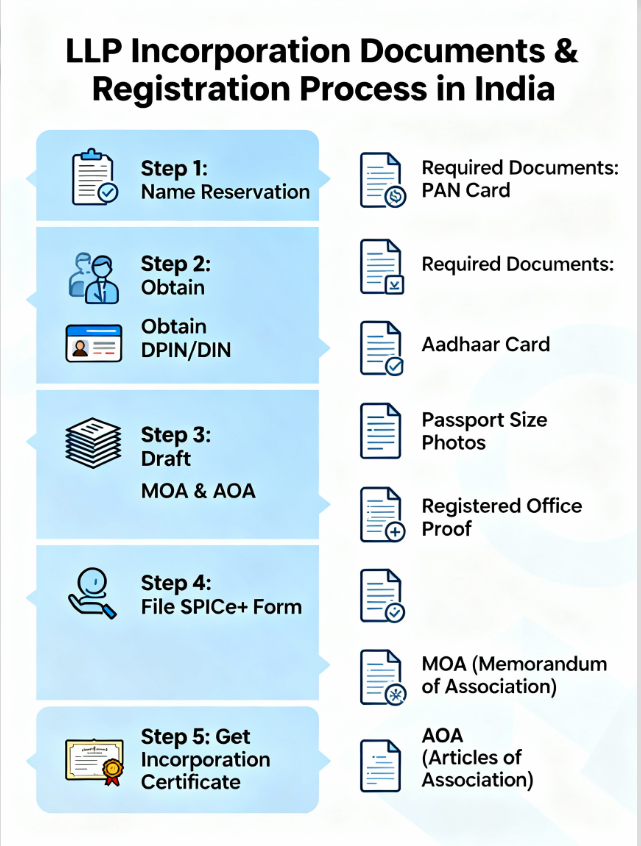
1. Incorporation Document
The Incorporation Document is the foundational legal document required to bring an LLP into existence under the Limited Liability Partnership Act, 2008. It is comparable to the Memorandum and Articles of a company, but simpler in structure. This document formally sets out the essential particulars of the proposed LLP and serves as the official declaration by the partners that they wish to form an LLP and agree to abide by the Act.
The Incorporation Document typically includes the name of the LLP, the proposed business activities, the address of the registered office, and details about the partners and designated partners, including their names, addresses, and contributions. It also contains a declaration that all legal requirements of the Act have been complied with. In many ways, the Incorporation Document establishes the LLP’s legal identity even before the LLP Agreement comes into effect.
A crucial part of the Incorporation Document is the statement by a designated partner or by a professional such as a practising company secretary, chartered accountant, or advocate affirming that the information provided is correct and that all requirements for registration have been met. This requirement ensures authenticity and reduces the likelihood of fraudulent incorporations. Once this document is submitted along with the necessary fees, it becomes the official evidence of the LLP’s intention to form a lawful entity. In essence, the Incorporation Document is the first legal footprint of the LLP, marking its entry into the corporate world.
2. Incorporation by Registration
Incorporation by Registration refers to the formal process through which the Registrar of LLPs registers the LLP and grants it legal existence. Under the LLP Act, the process begins when the Incorporation Document and required forms are submitted to the Registrar. If the Registrar is satisfied that all statutory requirements have been complied with, including proper filing of the document, payment of fees, and verification of partner details, he proceeds to register the LLP.
The moment the Registrar registers the Incorporation Document, the LLP becomes a body corporate. This grants the LLP a separate legal personality distinct from its partners, enabling it to own property, conduct business, and enter into contracts in its own name. The Registrar then issues a Certificate of Incorporation, which serves as conclusive proof that the LLP has been duly formed. From that date forward, the LLP enjoys perpetual succession, meaning its existence continues independently of changes in partnership.
Incorporation by registration also ensures transparency and accountability because the details of the LLP become part of the public corporate registry. This promotes trust in commercial dealings because third parties can verify the LLP’s existence and its designated partners. The process is designed to be simpler than company incorporation, which is why LLPs are often preferred by small businesses and professionals. Through registration, an LLP gains both legal recognition and corporate protections, establishing the foundation upon which it can carry out lawful business activities.