
This article is authored by Mr. Prashant Panwar, an Assistant Professor of Law at K.R. Mangalam University, who brings his academic expertise and deep understanding of legal matters to provide insightful analysis on this important judicial development.
Overview
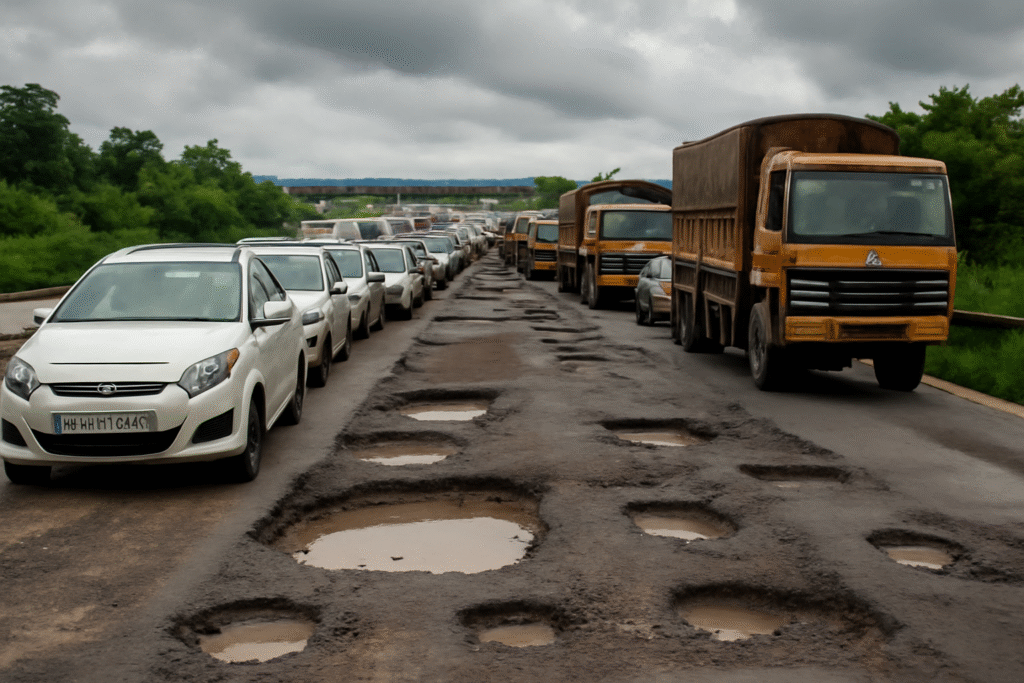
The Supreme Court’s August 2025 ruling in National Highways Authority of India and Anr. vs. OJ Janeesh and Ors. cements a simple benchmark for India’s toll regime: no service, no toll. By upholding the Kerala High Court’s suspension of toll collection at the Paliyekkara plaza on NH‑544 and dismissing NHAI’s appeal, the Court affirmed that citizens already paying vehicle taxes cannot be compelled to fund unsafe, potholed, and chronically jammed highways through user fees.
What the ruling holds
The Court refused to interfere with the Kerala High Court’s four‑week toll suspension at Paliyekkara (Thrissur) on the Edappally–Mannuthy stretch of NH‑544, citing pervasive potholes, marathon traffic jams, and safety risks, and it dismissed the appeals by NHAI and the concessionaire. A bench led by CJI B. R. Gavai with Justices K. Vinod Chandran and N. V. Anjaria held that the public’s obligation to pay a user fee is premised on “unhindered, safe, and regulated access” to the road; where that assurance collapses, toll collection must pause. The Court asked the High Court to keep monitoring repairs and traffic management and to implead responsible contractors for accountability, clarifying that suspension is temporary and tied to restoration of smooth traffic.
Background and factual matrix
On August 6, 2025, the Kerala High Court suspended tolls for four weeks after finding severe roadway deterioration and unmanageable congestion across roughly 65 km, triggered by ongoing works and persistent neglect. Material before the courts referenced gridlocks stretching up to 12 hours and hazardous diversions, defeating the premise of efficient access on a national highway. NHAI and the concessionaire argued statutory entitlement to tolls and financial prejudice from suspension, but both the High Court and Supreme Court prioritized maintenance duties and road users’ rights over revenue concerns.
The doctrinal core
- Reciprocity: Toll collection rights are inseparable from the reciprocal statutory duty to provide safe, motorable, reasonably congestion‑free roads; breach of duty vitiates tolls for the period of non‑service.
- Public trust and legitimate expectation: Compulsory user fees create a legitimate expectation of service quality; failure to meet this expectation undermines the legal and moral basis of tolling.
- Proportionality: The bench questioned how a ₹150 toll could be justified when a one‑hour traverse expanded into 12 hours, emphasizing disproportionate burdens on time, fuel, and the environment.
Notable observations from the bench
The Court remarked that citizens, having already paid taxes, should not pay further “to navigate the gutters and potholes—symbols of inefficiency,” encapsulating the user‑centric approach. It described tolls during such conditions as a levy on commuters’ “purse and patience,” highlighting economic and environmental spillovers from gridlocks. The bench’s pointed query—“Why should a person pay ₹150 if it takes 12 hours to cross 65 km?”—became the emblematic articulation of the no‑service, no‑toll principle.
Policy and contractual implications
The suspension is interim, not perpetual; tolling may resume upon judicial satisfaction that the road is restored to safe and smooth conditions. Financial impacts on concessionaires are to be addressed through contractual relief mechanisms with NHAI—such as time extensions or compensation—rather than imposing charges on users during periods of service failure. Continued High Court oversight and potential impleadment of on‑ground contractors aim to align incentives toward maintenance, scientific traffic management, and incident response.
National significance
This ruling sets a clear national baseline: tolls must reflect delivered service quality in safety and traffic fluidity, not merely formal concession rights. It empowers commuters and civil society to seek time‑bound remedial orders and interim toll suspensions when persistent neglect renders highways unsafe or unusable. For NHAI and operators, the message is unambiguous—prioritize preventive maintenance, robust work‑zone engineering, and real‑time traffic de‑bottlenecking to preserve tolling legitimacy.
Practical guidance for stakeholders
- Road users: Maintain contemporaneous records—photos, timestamps, and logs of delays and hazards—to substantiate petitions seeking remedial works or temporary toll suspension.
- Agencies and contractors: Implement rigorous condition audits, time‑bound pothole repair protocols, lane discipline, signage, and safe diversions; coordinate with courts and traffic police for incident management.
- Concessionaires: Strengthen maintenance SLAs and incident‑response systems; where suspensions occur, pursue contractual remedies with the authority rather than relying on user charges during breach periods.
A new baseline for tolling: no service, no toll
By dismissing NHAI’s appeal and endorsing continued judicial oversight, the Supreme Court has reaffirmed that statutory toll rights are contingent on statutory performance. The decision places users’ rights at the center of India’s toll ecosystem and provides a practical, enforceable standard for accountability on national highways.
References
- Bar & Bench, “Can’t force citizens to pay toll in addition to vehicle tax for pothole-ridden roads: Supreme Court”
- Indian Express, “‘Toll on citizens’ purse and patience’: Supreme Court slams NHAI, backs Kerala HC order halting toll at Paliyekkara”
- LiveLaw, “Supreme Court dismisses NHAI’s appeal against Kerala HC order suspending toll collection at Paliyekkara in NH-544”
- LiveLaw case note: “2025 LiveLaw (SC) 819 | National Highway Authority of India and Anr. v. O.J. Janeesh and Ors.”
- Supreme Court Observer, “Edapally–Mannuthy Highway: SC upholds Kerala HC’s Order to suspend toll collection”
- Hindustan Times, “No toll collection on pothole-riddled, jammed highways: Supreme Court”
- Court document (order PDF), CA @ SLP (C) No. 22579 of 2025, NHAI & Anr. v. O.J. Janeesh & Ors.