
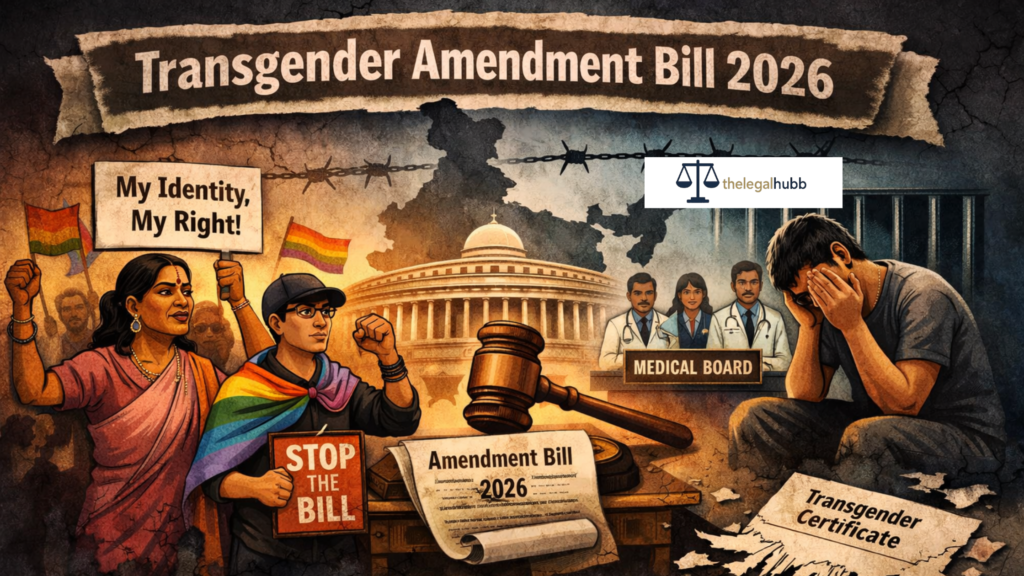
A Controversial Legislative Move
In March 2026, the Union government introduced the Transgender Persons (Protection of Rights) Amendment Bill, which was passed by Parliament within a remarkably short span of time. The speed of its passage, coupled with the absence of wide stakeholder consultation, has raised serious concerns among activists, legal experts and members of the transgender community.
Several voices, including members of statutory bodies, expressed dissatisfaction with both the process and substance of the amendment. Some even resigned in protest, arguing that the law represents a regression in the recognition of dignity and self-identity.
At present, the Bill awaits presidential assent, while civil society groups continue to demand reconsideration.
From Recognition to Restriction
To understand the controversy, it is important to revisit the legal foundation of transgender rights in India. The 2014 NALSA judgment recognised gender identity as an intrinsic part of personal autonomy and held that individuals have the right to self-identify without undergoing medical procedures. This principle was later reflected in the Transgender Persons Act, 2019, which aimed to provide legal recognition and protection against discrimination.
The 2026 amendment marks a significant departure from this framework. Instead of preserving a broad and inclusive understanding of gender identity, it introduces a narrower definition that recognises only specific categories while excluding several others.
This shift has been criticised for ignoring the diversity of identities across different regions and communities. Many argue that by limiting recognition, the law risks making certain groups legally invisible.
The Question of Identity and State Control
One of the most debated aspects of the amendment is the change in how legal recognition is granted. Under the earlier framework, individuals could obtain identity certificates through a relatively straightforward administrative process. The new amendment introduces a requirement of approval from a government-appointed medical board.
This move has been widely criticised as a form of re-medicalisation of identity. Gender identity, which was earlier recognised as a matter of personal self-determination, now becomes subject to institutional verification.
Critics argue that such a system raises practical as well as ethical concerns. There is no universally accepted medical test to determine gender identity, and requiring individuals to prove their identity before a panel may lead to delays, humiliation and exclusion.
Privacy and Dignity Concerns
The amendment also raises serious questions about privacy. By requiring medical evaluation and documentation, the law potentially exposes deeply personal aspects of an individual’s life to bureaucratic scrutiny.
Additionally, the requirement for medical institutions to share information with authorities creates concerns about data protection and misuse. Without clear safeguards, sensitive personal information could become part of administrative records.
This raises a broader constitutional issue: whether such provisions are compatible with the right to privacy and dignity under Article 21.
Stereotypes and Criminalisation
Another contentious feature of the amendment is the introduction of new offences related to coercion into transgender identity. While framed as protective measures, these provisions have been criticised for reinforcing harmful stereotypes.
The idea that gender identity may be imposed or manipulated overlooks the lived realities of transgender individuals. It also risks portraying an already marginalised community through a lens of suspicion.
Moreover, broadly worded provisions could unintentionally criminalise support systems. Community networks, mentorship and even familial support could be misinterpreted as inducement, thereby discouraging essential forms of assistance.
Legal Uncertainty and Its Consequences
The amendment also creates uncertainty for individuals who have already obtained legal recognition under the 2019 law. With changes in definitions and criteria, the status of previously issued identity certificates remains unclear.
This uncertainty has significant implications. Legal recognition is often the gateway to accessing essential services such as healthcare, education, employment and welfare schemes. If recognition is questioned, access to these rights may also be affected.
In this sense, the amendment not only reshapes the future but also destabilises the past.
A Growing Movement of Resistance
The response to the amendment has been widespread and multifaceted. Activists, legal professionals and community groups across the country have mobilised to demand reconsideration of the law.
Efforts are being made to ensure accountability in the legislative process, particularly regarding the lack of consultation with affected communities. At the same time, public campaigns, statements and demonstrations are drawing attention to the potential impact of the amendment.
Support networks are also emerging to assist individuals navigating the emotional and legal uncertainties created by the new law.
The Road Ahead
The debate surrounding the amendment highlights a fundamental tension between state regulation and individual autonomy. At its core, the issue is not merely legal but deeply constitutional.
The question is whether identity should be defined by the individual or determined by the state.
As the law awaits final approval, its future may depend not only on legislative processes but also on judicial review and continued public engagement. The evolving response from civil society suggests that the conversation is far from over.
Conclusion
The Transgender Persons Amendment Bill, 2026, represents a critical moment in India’s journey toward equality and inclusion. While framed as a reform measure, it has sparked widespread concern about its impact on dignity, privacy and self-identification.
The strength of a constitutional democracy lies in its ability to protect the rights of its most vulnerable citizens. Whether this amendment aligns with that principle will be tested in the days to come.
Ultimately, the debate is not just about law—it is about recognising identity, respecting dignity, and upholding the promise of equality for all.