Introduction
An empty courtroom is never truly silent—it reverberates with the unheard pleas of the poor, abandoned at the altar of justice. When we talk of criminal defence, we often come across terms like ‘dramatic cross-examination’ or ‘technicalities of law’ but it should actually be about safeguarding dignity of the poor which can be easily crushed by the quiet violence of the biased system. Their trials often show more about the failures in access, resources, and compassion than about guilt. To label defence lawyers as “protectors of criminals” misses the reality. They act as a shield for vulnerable citizens against a system that can fail without consequences. The human aspect of criminal defence isn’t about glorifying crime; it is about making sure that justice does not remain a privilege for the wealthy. These are the stories you don’t often hear, but you need to.
Beyond the Headlines: More Than Just ‘Criminals’
Headlines often reduce human lives to a single word, criminal. This label ignores the complexities of poverty, circumstance, and systemic neglect that lead many into the dock. For those who cannot afford a lawyer, trials are not only about proving innocence but also about surviving a system that typically favours their defeat. The media rarely shares their story: the overworked defence lawyer, the family burdened by stigma, and the accused who cannot speak up due to lack of resources. Reducing them to headlines denies their humanity. Justice should not be selective; it must protect the vulnerable as strongly as it prosecutes the guilty. When defence fails—not by law but by neglect—the outcome is not a fair trial but a mistrial. These are not just stories of defendants; they serve as warnings about a justice system that risks condemning the poor simply for being poor.\
The Weight of Being Wrongly Accused
To be wrongly accused is not just a legal mistake; it is a human tragedy. For the poor, this tragedy becomes even worse. An accusation can take away their dignity, break their families apart, and determine their fate long before a verdict is given. The idea of being innocent until proven guilty, which is essential to justice, often falls apart under the pressure of poverty. Without access to skilled legal help, those who are poor stand unprotected against a system that too easily mistakes silence for guilt. A wrongful accusation is not just about prison; it includes the quiet punishment of lost jobs, social shame, and deep emotional wounds. Each mistrial in defending the poor is not only a flaw in the process; it is a life disrupted, a future taken away. Justice cannot be seen as legitimate if it lets the vulnerable pay the highest price for the system’s errors.
When Poverty Meets the Courtroom
Courtrooms are meant to embody impartiality, yet wealth often determines whose voice is heard. The rich come in with experienced lawyers, ample resources, and the luxury of time. The poor arrive without these advantages, relying on overworked legal aid, a limited grasp of procedures, and the heavy stigma of poverty. The law may profess equality, but its practice is full of bias: money buys preparation, influence, and persuasion, while poverty leads to delay, neglect, and silence. This imbalance reshapes justice itself. A wealthy accused person can craft a narrative, challenge evidence, and draw attention. The indigent accused, on the other hand, is seen as just a statistic, their story drowned out in rushed proceedings. In many cases, it is not the crime but the lack of resources that leads to a conviction. Poverty becomes the hidden evidence against them, tipping the scales before arguments even start When defence depends on wealth, trials are no longer about truth but about privilege. This creates not just individual injustice but a systemic failure. Each time poverty is treated as guilt, the courtroom stops being a place of justice and becomes a market—where fairness is sold, and the poor cannot afford to participate.
Defence Lawyers as the Last Line of Hope
For many accused individuals living in poverty, a defence lawyer is the last link to justice. In a system where being poor feels like a sentence, having a lawyer can make the difference between a fair hearing and a silent defeat. Some defence lawyers take on this role with strong commitment. They fight not for fame or media coverage, but to uphold the dignity of those whom society has already judged. They are the ones who give humanity to the accused, challenge bias, and remind the court that justice should not be only for the wealthy. However, the reality is not always admirable. Some lawyers view poor clients as easy targets. They linger for fees, slow down cases, or treat them carelessly because the accused cannot pay more. For those in vulnerable situations, this is another form of betrayal. The very protection meant to help them turns into a source of wrongdoing. This situation highlights the delicate nature of criminal defence. When done with integrity, it protects the core of justice. When tainted by greed, it reinforces systemic unfairness. Defence lawyers thus serve as both a source of hope and a potential risk—acting as the last line between fairness and failure in a system that is already biased against the poor.
Second Chances: Rehabilitation Over Punishment
Justice cannot be measured only in years of imprisonment; it must also consider what comes after. For the poor, punishment often turns into a lifelong sentence that goes beyond prison walls. Stigma, lost jobs, and exclusion from society keep them trapped in cycles of despair. Justice should not focus only on punishment; it must also allow for redemption. Rehabilitation provides that opportunity through education, skill-building, and reintegration programs that help individuals return as contributors instead of outcasts. When courts only emphasize punishment, they reinforce poverty’s grip. They punish not just the accused but also their families and communities. A system that values rehabilitation recognizes that people can change. It refuses to define individuals by their worst mistakes. True justice is not about crushing lives; it is about rebuilding them. Offering second chances strengthens both individuals and the societies they re-join.
The Silent Battles Families Fight
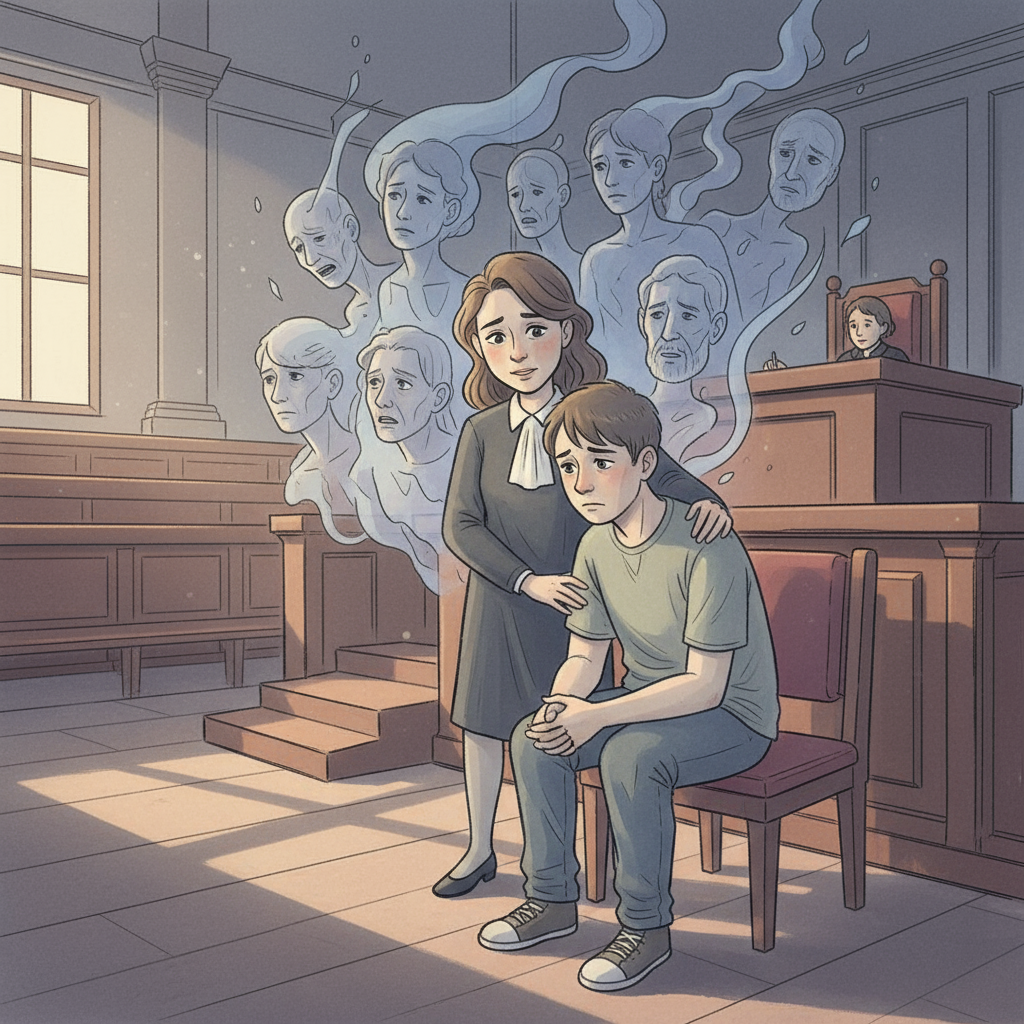
Behind every person accused of a crime is a family caught in a storm they never chose. For low-income households, the arrest of a family member means more than just a legal struggle; it causes a breakdown of stability. Daily wages go toward legal fees, children deal with stigma at school, and entire families are labelled by their connection to “crime.” Their pain is seldom mentioned in judgments or headlines, yet it remains constant and damaging. Mothers wait outside courtrooms, siblings carry burdens too heavy for them to bear, and fathers sacrifice their dignity for borrowed cash. These struggles are fought quietly, without a lawyer to speak for them. For justice to truly matter, it must include them as well—not just the accused in the courtroom.
Why the Human Side of Justice Matters?
Justice is not just about verdicts or sentences; it is also about the lives it affects. Behind every case file is a person, a family, and a future hanging in the balance. When the system loses sight of this, justice becomes a cold calculation: laws applied without care, outcomes determined without humanity. The poor often suffer the most from this neglect. To them, a mistrial is not just a legal mistake; it is a lost childhood, a shattered family, a life permanently damaged. The human aspect of justice is important because it shows us that courts are not just places for punishment but also protectors of dignity. This perspective urges us to see the accused not as case numbers or headlines but as individuals who can experience pain, change, and redemption. Without this viewpoint, the law can turn into a tool of exclusion, punishing those in poverty rather than safeguarding their rights. Justice is most effective when it combines truth with compassion. Ignoring the human element undermines its core purpose. In every silenced cry and every overlooked story, there is a warning: when we remove humanity from justice, we strip society of its essence.